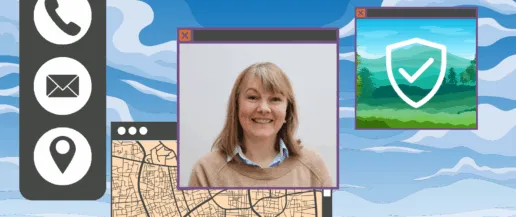
We are always humbled by how much the participants are willing to be reflective, and to push against the challenges in their work and the sector.
Decolonising Safeguarding trainer
INTRAC’s online course on Decolonising Safeguarding is one of the latest additions to our expanding training offer. A safeguarding course with a difference, it helps participants to unpack and challenge the unequal power structures that perpetuate safeguarding harms. Ahead of the next run of the course which begins in January 2026, Andy Johnson spoke with Lucy Heaven Taylor who co-leads the course together with Angie Bamgbose.
AJ: What does decolonising safeguarding mean to you? How has the course content been designed to incorporate a decolonial approach?
LHT: Decolonising safeguarding to me is about recognising the power and privilege that has benefitted me in my career, then to use my platform I have gained to hand over that power to others.
Firstly, I would say that of course, we will not be able to decolonise safeguarding overnight. This course is about starting on the journey. It involves examining your organisation’s policies, practices and approaches and, using a framework developed by Angie and myself, unpacking how they have been influenced by colonial thinking. The workshop is then about identifying the steps participants can take – be they big or small – to change how their organisation approaches safeguarding, making it more contextually appropriate, and embedded and led by local practice.
Whilst we do share a framework, we have designed the workshop as much as possible to reflect a decolonial approach. The course is not about telling participants how to decolonise safeguarding – that just replicates the existing norms. Instead, we guide participants to solutions and approaches of their own making – with help from their peers.
AJ: How would you describe the kind of person (or organisation) who is well-suited to signing up for this course?
LHT: This course is suitable for safeguarding practitioners or leaders who have an understanding of, or influence over their organisation’s safeguarding practice. This would enable them to make the most of the course and apply the learning to make real changes in the workplace. For example, this could be advisors, practitioners or project staff, working locally or globally – it doesn’t matter. We also welcome those practitioners in the sector who are interested in examining safeguarding through an intersectional and decolonising lens.
AJ: Are there any particular professional experiences you have had which influence the way you approach delivering this course?
LHT: Too many to count. Like many in the sector, I encountered situations in my career that didn’t sit comfortably, but a lot of the time I felt I was too ‘junior’ to raise it. I think there were also many occasions where I was not the right person to be advising, or doing the work, but had got there because of being from the global minority. Angie of course also brings her own individual set of experiences to the course. Together we hope to create a safe space so that participants can feel open to sharing their experiences, but also any questions or concerns they might have about taking a decolonised approach.
We are always humbled by how much the participants are willing to be reflective, and to push against the challenges in their work and the sector.
AJ: INTRAC always aims to make training courses genuinely interactive and engaging. How does the format of the Decolonising Safeguarding course reflect this?
LHT: Although the subject may sound serious, we approach it with positivity. The workshop is a mixture of formats, including online workshops, peer learning sets and coaching sessions, so we really mix up the format. This means that the course is probably a bit different from others that participants have attended.
AJ: The course includes peer learning sets and individual coaching sessions. What can participants expect from these?
LHT: Peer learning sets are a facilitated space for small groups of participants to share their challenges, and work through them with their peers in a way that brings out solutions and strategies that were already inside them. If you have never tried a peer learning set, I really recommend it as a problem-solving approach. Coaching sets are a one-on-one opportunity to really focus on the individual and take specific issues and challenges they are facing in decolonising safeguarding and help them think through next steps. You can choose either facilitator for your coaching sessions.
Angie and I really want participants to get the most from this workshop, and we put a lot into every individual who attends.
AJ: When the course comes to an end, how will you know it has been a success for participants?
LHT: Well, we want this to be practical – the aim of the workshop is that they come away with a realistic, actionable plan to take forward decolonising safeguarding in their work. We also want them to feel that they have a network of peers who are supporting them and who understand their challenges – safeguarding can be a lonely place. Finally, we want to celebrate successes, no matter how big or small, and to leave the participants feeling positive and supported in their way forward!
Find out more and apply today
The next Decolonising Safeguarding course will begin on 14 January 2026. For all the information you need, including a detailed course profile and how to apply, visit the course page today. Discounts for returning participants, INTRAC network members, and Bond members are applicable – find out more about these, and our training access scholarship (TAS) via our FAQ.
The course provided a safe and supportive space for vulnerability and open dialogue. I appreciate the opportunity to learn from my peers and the valuable insights shared by the mentors. I am now equipped with actionable strategies and tools that I can implement in my own work, ensuring that my safeguarding practices are inclusive and culturally sensitive. Thank you for creating such an empowering learning experience!
Zimbabwe